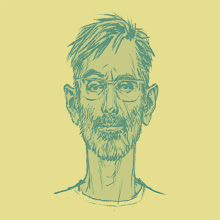
Excerpt addendum
(See
previous post.)
Some approaches to architecture – De Stijl, for instance – exclude the idea of hierarchy and of ranked compositional elements; they also eliminate ornaments and contour patterns. Their problematic program to explore and use space is different from that of classicism, and they arrive at different results. Still other approaches, such as expressionism, aspire to contour patterning as almost the single instrument for creating architectural form. These approaches defy taxis, avoid the elementariness of architecture, abandon genera, and declare themselves above the ruling of metric patterns. They try to develop walls, openings, complete plans exclusively out of the very stuff of their ornaments and their contour shape units. They rely on the adventures of the profile, and they also arrive at products quite different from the classical buildings. These are poetics as coherent as the one of classicism and equally complex to talk about in any detail. To do a proper job analyzing such anticlassical poetics is an altogether different enterprise from the one we have undertaken here.
An excerpt
From Alexander Tzonis & Liane Lefaivre,
Classical Architecture: The Poetics of Order (previous excerpts:
1,
2), chap. 2 "Genera: the elements":
Let us look at the canonical three genera [or "orders"] of classical architecture as a series for a moment. At one end, the Doric is divided into a few brief, plain members. At the other end, the Composite has so many members that they almost seem to gesticulate and intertwine. Obviously we have an increasing complexity here, an augmentation of subsections. What the Doric does with one single contour unit – for example, the one torus base – the Composite can take up to six or seven units to do through embedding and amplification. This applies to other members besides the base. The single Doric abacus, for example, is subdivided into three sections in the Ionic and into five in the Corinthian. The architrave, a single unit in the Doric, is sectioned into five units in the Ionic and into seven in the Corinthian. At each genus step more details are added into the same section; more shape events are compressed within the same stretch of space.
This brings us full circle to the point made at the beginning of this chapter. We can now elaborate further: The genera form a level of formal constraints that organize an architectural composition and complement the taxis. Although taxis governs the relation of part to whole, the genera dictate the direction, seriation, and hierarchy of the parts. Through the configuration of their profile, the genera make us understand and control space in a particular way. They have the built-in capacity to do so because they are internally organized as a string of shape contour patterns that can represent progressions and because they can be structured in terms of discrete steps and hierarchies.
It should be clear by now that the moldings – the cymatia, the bead, the fillet, the scotia, and the cavetto – or so-called ornaments of the classical genera, are not in the least "ornamental" and "decorative" in the sense of a frivolous adjunct of an almost superfluous elaboration. They are an essential structure of the classical system, vital to its poetics of order. Although the moldings affect small-scale aspects of the composition, their impact is major. They can blur distinctions and clarify them. They make terminations invisible, and they can sharply demarcate them. The ornament in classical architecture should not be confused with the ornament in classical music, synonymous with agréments or plaisanteries and mere improvisation. Neither should it be mistaken for the embellishing frills that designers increasingly applied during the nineteenth century for purposes of conspicuous consumption. The ornaments, in the sense referred to here, can make or break the coherence of a classical composition.

illustration: architectural theory from the renaissance to the present, p 443, taschen 2003
Sketch
Started a class tonight over at the community college – a lower-level requirement for a certificate I'm after. Tonight, actually, was
very low-level. We'll see how things develop. Might turn out to be, in the end, a good weekly excuse to get in a little drawing.
There's a great little A6-size sketchbook that stays in my brief-bag – so is pretty much with me wherever business of one kind or another takes me – but that hasn't seen use in about four years. Tonight it came out toward end of class – perhaps to find that it's got a future after all. Can't deny feeling some shame whenever I happen to notice it, & recall that two-thirds of its sheets are blank. (Its inaugural use, I observe, is dated 1/19/2000, for crying out loud!)

It's seen much better drawing than this, sad to have to say. (E.g., the first two examples
here.) But then it's also seen a lot worse.
I'll point out here that there's a new page of small drawings of people – friends & family, a miscellany – in the
sketch gallery, since the weekend.
Looking north
Burden
I called you because I could not stand alone
looking north to that skyline-
tree globed with its yellow apples
balancing like a fountain of planets
in the bright light and the blue air.
And because on the way there
I looked at a smooth cirque
the brook had worn in a stone;
and nothing as soft as water
could, by taking care,
have so pestled and polished
that granite mortar; only
by a thousand years of indifference,
of aiming elsewhere.
I wish we might do – or no,
look back and find we had done –
some un-advertized thing,
overwhelming and un-self-aware
as water streamlining a stone, or a tree's
kindling in an empty meadow
its casual Hesperides.
by Peter Kane Dufault, 1978
With Julia in mind – who herself knows from experience, it might be said, about being a thing exposed
balancing like a fountain of planets/ in the bright light and the blue air – and in that, perhaps, knows more than she knows she knows about Grace.
Places
Added one more to the pages I've been calling my
sketch gallery. It's been a good exercise to pull these together, because they represent at the same time a largely neglected direction in my past efforts to get some kind of discipline of mind for drawing established, and also the direction that most insistently calls to me now and that I have the greatest sense of expectancy about pursuing – if I can find the opportunity. These are attempts at capturing places, or spaces, or little scenes – thoroughly mapped-out territory in the tradition of Western visual art, of course, if not in my own limited artistic experience.
I only have a few drawings to select from here, and none is particularly ambitious in subject or scope. Still, on the other hand, for me for the most part they're among the most engaging instances of all my old sketchbook material.
An excerpt
From Alexander Tzonis & Liane Lefaivre,
Classical Architecture: The Poetics of Order (previously excerpted
here), chap. 2 "Genera: the elements":
Now that the components and steps of subdivision of the genera have been identified, we can turn to the logic through which these components are put together. We proceed from the elementary level of the genera down to their details.
There are several ways of structuring space, but within the formal system of classifical architecture two paths have traditionally been open: metric patterns and contour motion. The case is once more similar to music and poetry. In music, patterns are generated both by rhythm, the regular alternation of accentuated and nonaccentuated sounds, and by modifications of pitch, the location of the musical sound in the tonal scale. In poetry, patterns are born also out of rhythm, arrangements alternating periodically stressed and unstressed syllables, as well as the contiguity and combinations of speech sounds, so-called phonemes, which create rhyming, alliteration, contrast, and variation.
In architecture, classical contour patterns arise from the regulated stream of surges, swirls, and whirlpools of solid matter. These small fractions of sequence – the curved ones are referred to as "little waves" or cymatia – make up, more than an assortment, almost a dictionary of appearances. Let us imagine this dictionary listed in the form of two columns of opposed entries. This form of data organization, corresponding to what Jakobson et al. (1952) called "binary oppositions", provides a clear and easy way of looking at and choosing from among contour shape characteristics. Here is the list:| protruding | — | indented |
|
| straight | — | curved |
|
| convex | — | concave |
|
| flat | — | inclined |
When we create a classical architectural profile, we pick out certain characteristics from this list and conjoin them. We can maintain the identity of a shape through repetition or by partially changing it through reduction or amplification. Finally, we can alter it by inversion or by inflection.
These means might seem scarce and simple, but the possibilities that arise from their combination, one might almost say conjugation, are enormous. It is these combinations that classical architects have employed and exploited within the tightest constraints. The most memorable invention of classical architecture – the Doric shaft – is perhaps the most obvious illustration of binary oppositions.

illustration: architectural theory from the renaissance to the present, p 275, taschen 2003
Historical perspective
"A corrective to two thousand years of Christianity" is Hollywood director Paul Verhoeven's modest summation of the notion behind his book, along with movie soon to follow, intended to bring to the masses a new, up-to-date picture of the
actual historical Jesus. Here's the 1st paragraph of
Anthony Sacramone's related First Things post of today:
One always hopes that a new year will both usher in what’s truly new and show the door to what’s proven stale. An example of the latter would be yet more “new” revelations about the “real” Jesus. No such luck. Paul Verhoeven, the man who brought us Robocop, Basic Instinct, Total Recall, and the Citizen Kane of lap-dancing melodramas, Showgirls, is making his own foray into that besotted enterprise.
Do take a glance, at least, at the rest of that.
What about, now, something of
a corrective to several hundred tedious years of people with a bit of popular audience or literary influence, and a need to put an all-too-pivotal and all-too-sovereign Lord Jesus into a historical box, heralding as the modern scientific mentality come into its day their 'discoveries' that the New Testament doesn't provide a tidy, simple account of his earthly life & ministry – hmm?
Winter whither

Some parts of the country are experiencing a fairly impressive winter, I hear. Around here, meanwhile, as January gets under way, it seems a stretch to call it a winter at all. In suburban Baltimore County we've hardly needed so much as to pull out a windshield scraper this year.
Since I'm not a student of earth sciences and don't have a post-colonial, post-industrial political axe to grind, I'm not going to hazard any guesses about what this may have to do with the grand narrative of global warming. It happens, in any case, that this hasn't been the mildest Maryland winter-thus-far of recent memory (of the past 35 years, to be exact, which is to say a little more than the practical extent of my own memory in total), but only the
fourth mildest. But in the context of frequent news items about vanishing polar bear habitat and so forth, there's something more-than-usually unsettling about going out in short sleeves in January even so.
Let earth receive her King!
 Georges de la Tour,
 The Adoration of the Shepherds,
c. 1645
Insight
Provocative penultimate paragraph from Algis Valiunas's
Weekly Standard essay for the Rembrandt year (via
Arts & Letters):
Although the current academic industry is out to make the chief interest of Rembrandt's painting "the way he applies his paint" (in the words of one fashionable art historian), the ordinary cultivated viewer can always hope to find in him the traditional artistic virtue inherent in the word vision: a species of wisdom, connected in representational art with insight into human, inhuman, and divine nature, as acquired by the most attentive observation, a working knowledge of great literary texts, and some sharp-elbowed acquaintance with philosophizing.
Drawing

Still not drawing very frequently in recent weeks, but continuing to feel plenty of motivation to pull back into habits & frames of mind in which being someone who draws is a continual preoccupation. (As, it seems, is
Mrs Irani, as you'll recognize if you've been checking in on her lately.)
The human skull study is the exercise to stay attached to and, at the same time, push off from – that's my strong feeling. Pictured, a little one done a few days ago (while sick & confined to my room, between extended bouts of sneezing & filling trash with Kleenex). There's enormous satisfaction in finding my way to the skull studies again, in feeling myself pulled to the particular stimulus & focus they represent. I don't have time here for the discussion I feel the subject deserves, unfortunately. I hope to come back to it before long.
One thing I suppose I ought not to leave altogether unsaid is that this sort of exercise doesn't in the least reflect, for me, interest in death symbology, the gruesome, the macabre, or even the merely bizarre. I've never been wired that way. No strong taste for ghouls, 'crypt-keepers', slasher flicks, goth punk, or the venerable gothic romance. I hope I can avoid leading anyone who looks in here to think otherwise.
I've added a page of old sketchbook skull studies in the
gallery pages inaugurated a couple of months ago, and will probably put up more before long. There's a good deal there to rebuild habits on, if I can get myself together to take advantage of it.
News
I note tonight that the BBC's main news page is running at the moment, well above the 'fold', a headline announcing a study that reveals the world's condom manufacturers make the things generally too big to be suitable for the male population of India. Accompanying the link, a photo of a handful of glistening pale yellow samples, close up. Not surprisingly, this headline also tops the site's list of the day's most-read articles.
A few years ago, I clearly recall, they ran a similar front-pager on a study that revealed the same unfortunate fact with regard to the condom-using demographic of
Germany.
Well, whatever keeps people paying attention, eh? I can't help picturing an editorial board of pimply fourteen-year-olds snorting into their hands as they spin about in designer chairs around a smart London conference room.
I hardly ever actually read the articles at the BBC site anymore. It's long since I felt I could expect consistently serious or fair accounts of major stories there.
Now I really should find a better place to get a glance at what's making the frigging international headlines.
(Trouble is, I really like the BBC site layout.)
Later: So – fed up, for the time being I've changed the bookmark that was 'bbc' to 'r' for Reuters, who have a somewhat improved page set-up since the last time I looked (months ago).
Reuters runs the condom headline somewhat
below the fold, at least, and in their off-beat category – and it's only reached number two on their 'most read' list. Well ... it's a step.
Old and new in the Forbidden City

November's
Metropolis includes a thoughtful
article (subscribers only – but email me if you'd like to view) on some of the story behind reconstruction of Jianfu Palace Garden, a subcomplex of
Beijing's Gugong, the 178-acre Forbidden City or Palace – well-known today as a tourism destination. The original Jianfu, 'nine ornate structures arranged in an intricate maze of walkways, courtyards, and gardens', was built for imperial pleasure in 1740 and burned down amid the
instability of the early Republic of China in 1923. The reconstruction, begun in 2000, is a project of the People's Republic initiated and made possible by a non-profit arm of Hang Lung Group, a Honk Kong-based developer.
The head of the Hang Lung organization, China Heritage Fund, is American-educated Happy Harun, and a primary architect on the project, interestingly, is a friend of hers brought up in both Chinese and U.S. settings, New York-based
Calvin Tsao. It's Tsao's perspective that makes the
Metropolis article particularly interesting reading, for me. Some weight is given to his articulation of the project's attempt at a rapprochement "between ... Modernist sensibility and ... respect for the culture of ... ancestral land, between interpretive impulses and the need to preserve" in the building of a new Jianfu that's part finely crafted replica in profuse, densely colorful imperial splendor and part contemporary architecture, also finely, even apparently traditionally, crafted but emphatically simple in detail and muted in color. The division is straightforward: exteriors are 'restored' and interiors 'new'. It should be noted that in spite of the author's attention to the thought given to this effort to reveal old by way of new, new in old, though, it's the gorgeous authenticity-driven replicated exteriors that get by far the best photo treatment – an easy editorial preference to understand, perhaps. I can't help wishing Tsao's restrained interiors, which in places, at least, seem to have their own constructional beauty, were allowed more page in order to illustrate the ideas the article particularly seems to turn on.
The marriage of contemporary and traditional apparently resulted in considerable part from budgetary necessity; to build palace buildings at a consistent level of restoration craftsmanship inside and out would have been financially extravagant, and perhaps, for securing proper materials and labor, simply impossible. One aspect of Tsao's insight, though, seems to have been to recognize another kind of necessity in the intertwining of old and new, old
in new, as a reflection in culture of human transiency and time-dependency. "Tsao cites the Italians’ success in inserting modern interiors into ancient buildings as a model for preservation. 'Rather than severing themselves from their history, they know what is temporal and what to preserve,' he says." But what's significant is that this knowing "what to preserve" doesn't seem to be for him a matter of being able to argue some return on investment with regard either to the building's 'museum-piece' aspect or to its 'public structure' aspect, but rather a matter of
building's part in formation of societal consciousness and identity. "'It's important to sift through the details of historic architecture to understand what part of its DNA you want to take with you,' he says. 'And that DNA is not about swooping roofs or gilded columns, it's about human interaction.'" Here, I think, is an architect's viewpoint worth some dwelling on.
A two-paragraph summary of the Jianfu project from
Architectural Record is
here.
There's more on Happy Harun's role, with additional detail on the restoration process,
here.
Something of an overview of current Forbidden City restoration can be had
here.
Additions
New page added to the emerging
sketch gallery tonight: a pretty varied handful of old self-portrait sketches.
Another excerpt
More (see last post) from Umberto Eco's
The Mysterious Flame of Queen Loana.
Amalia had told me that one entered the attic from the left wing. I had imagined a spiral wooden staircase, but instead there were stone steps, quite comfortable and practical – otherwise, I later realized, how would they have been able to carry up all that stuff they stashed away?
As far as I knew, I had never seen the inside of an attic. Nor of a cellar, for that matter, but everyone knows what cellars are like: subterranean, dark, damp, always cool, and you have to bring a candle, or a torch. The gothic romance is rich in the subterranean, the monk Ambrosio wondering gloomily among crypts. Natural underground passageways, like Tom Sawyer's caverns. The mystery of darkness. All houses have cellars, but not all have attics, especially in cities, where they have penthouses. But is there really no literature of attics? And in that case what is Eight Days in an Attic? The title came to mind, if nothing else.
Even if you do not go through them all at once, you can tell that the attics of the Solara house extend over all three wings: you enter an area that stretches from the façade to the rear of the building, but then narrower passages open and bulkheads appear, wooden partitions that divide the spaces, routes defined by metal shelving units or old chests of drawers, the interchanges of an endless labyrinth. Having ventured down one of the corridors on the left, I turned once or twice more and found myself back in front of the entrance.
Immediate sensations: heat, above all, which is natural just beneath a roof. Then light: it comes in part from a series of dormer windows, which can be seen when you look at the front of the house, but which on the inside are largely obstructed by piles of junk, so that in some cases the sunlight barely filters through, reduced to yellow blades astir with an infinity of particles, revealing that the penumbra must also be crazed with a multitude of motes, spores, primordial atoms caught up in their Brownian skirmishes, primal bodies swarming in the void – who spoke of those, Lucretius? Sometimes those slants of light ricocheted off the glass panes of a dismantled buffet of a full-length mirror that from another angle had looked like merely another dull surface propped against the wall. And then the occasional daylight, darkened by decades of encrusted pluvial detritus but still able to make a pale zone of illumination on the floor.
Finally, the color: the attic's dominant color, imparted by the roof beams, by the crates piled here and there, by the remains of wobbly chests of drawers, is the color of carpentry, composed of many shades of brown, from the yellowish-brown of unfinished wood to the warmth of maple to the darker tones of old dressers, their finishes flaking off, to the ivory of old papers overflowing their boxes.
If a cellar prefigures the underworld, an attic promises a rather threadbare paradise, where the dead bodies appear in a pluverulent glow, a vegetal elixir that, in the absence of green, makes you feel you are in a parched tropical forest, an artificial canebreak where you are immersed in a tepid sauna.
I had thought cellars symbolized the welcome of the mother's womb, with their amniotic dampness, but this aerial womb made up for that with an almost medicinal heat. And in that luminous maze, where if you pushed aside a couple of roof tiles you would see the open sky, a complicit mustiness hung in the air, the odor of silence and calm.
After a while, however, I no longer noticed the heat, gripped as I was by the frenzy of discovery. Because my Clarabelle's treasure was certainly there, though it would take a lot of digging and I had no idea where to begin.
(Have to say that enchanting as the bit-by-bit encounter with the old house's forgotten places/spaces is for me, as it figures in the unfolding of this story, here in particular the scene comes over a little clumsy, choppy somehow. Is it partly a difficulty of translation? – can't help wondering. In any case, I suppose, it's a lot of impression to render fluidly in a few paragraphs.)
An excerpt
I asked Paola what my political leanings were. 'I don't want to find out I was a Nazi or something.'
'You're what they call a good liberal,' Paola said, 'but more from instinct than ideology. I always used to say politics bored you – and for the sake of argument you called me La Pasionaria. It was as if you sought refuge in your antique books out of fear, or contempt for the world. No, that's not fair, it wasn't contempt, because you were fervent about the great moral issues. You signed pacifist and nonviolent petitions, you were outraged by racism. You even joined an antivivisection league.'
'Animal vivisection, I imagine.'
'Of course. Human vivisection is called war.'
'And was I ... always like that, even before meeting you?'
'You skated over your childhood and adolescence. And anyway I've never really been able to understand you about these things. You've always been a mix of compassion and cynicism. If there was a death sentence somewhere, you'd sign the petition, you'd send money to a drug rehab community. But if someone told you, say, that ten thousand babies had died in a tribal war in central Africa, you'd shrug, as if to say that the world was badly made and there's nothing to be done. You were always a jovial man, you liked good-looking women, good wine, and good music, but I always got the impression that all that was a shield, a way of hiding yourself. When you dropped it, you used to say that history is a blood-drenched enigma and the world an error.'
'Nothing can shake my belief that this world is the fruit of a dark god whose shadow I extend.'
'Who said that?'
'I don't remember.'
'It must be something that involved you. But you always bent over backwards if anyone needed anything – when they had the flood in Florence, you went as a volunteer to help pull books out of the mud at the Biblioteca Nazionale. That must be it, you were compassionate about the little things and cynical about the big things.'
'That sounds fair. One does what one can. The rest is God's fault, as Gragnola used to say.'
'Who is Gragnola?'
'I don't remember that either.'
From
The Mysterious Flame of Queen Loana, Umberto Eco 2004, chap. 4. (The most recent of audio titles I've had playing in the truck.) The novel's principal character is an antiquarian bookseller who's lost all memory of identity & personal connections – but almost none of books & their contents.
All saints
On this mountain the Lord of hosts will make for all peoples a feast of rich food, a feast of well-aged wines, of rich food filled with marrow, of well-aged wines strained clear. And he will destroy on this mountain the shroud cast over all peoples, the sheet that is spread over all nations; he will swallow up death forever. Then the Lord God will wipe away the tears from all faces, and the disgrace of his people he will take away from all the earth, for the Lord has spoken. It will be said on that day, Lo, this is our God; we have waited for him, so that he might save us. This is the Lord for whom we have waited; let us be glad and rejoice in his salvation.Isaiah 25: 6–9
The Old Testament reading from this morning's service of worship at
Emmanuel Lutheran here in Catonsville, Baltimore County.
Laughter
Laurie Bertrand posts
most wonderful informal photo portraits of children from time to time. Man, what a gift she has!
Here are a couple of new ones of her nephew Isaiah, posted last week.
Later: Looked through old posts a bit for a few past favorites:
Olivia ('wonderful' hardly seems adequate here),
Isaiah, and
Isaiah. Hard to pick favorites, though, frankly, because every one she posts is brilliant.